Payment Innovations Fueling Larger Accumulations in Wireless Live Gaming
Written by Blake Fischer · Jul 10, 2026

Payment Innovations Fueling Larger Accumulations in Wireless Live Gaming
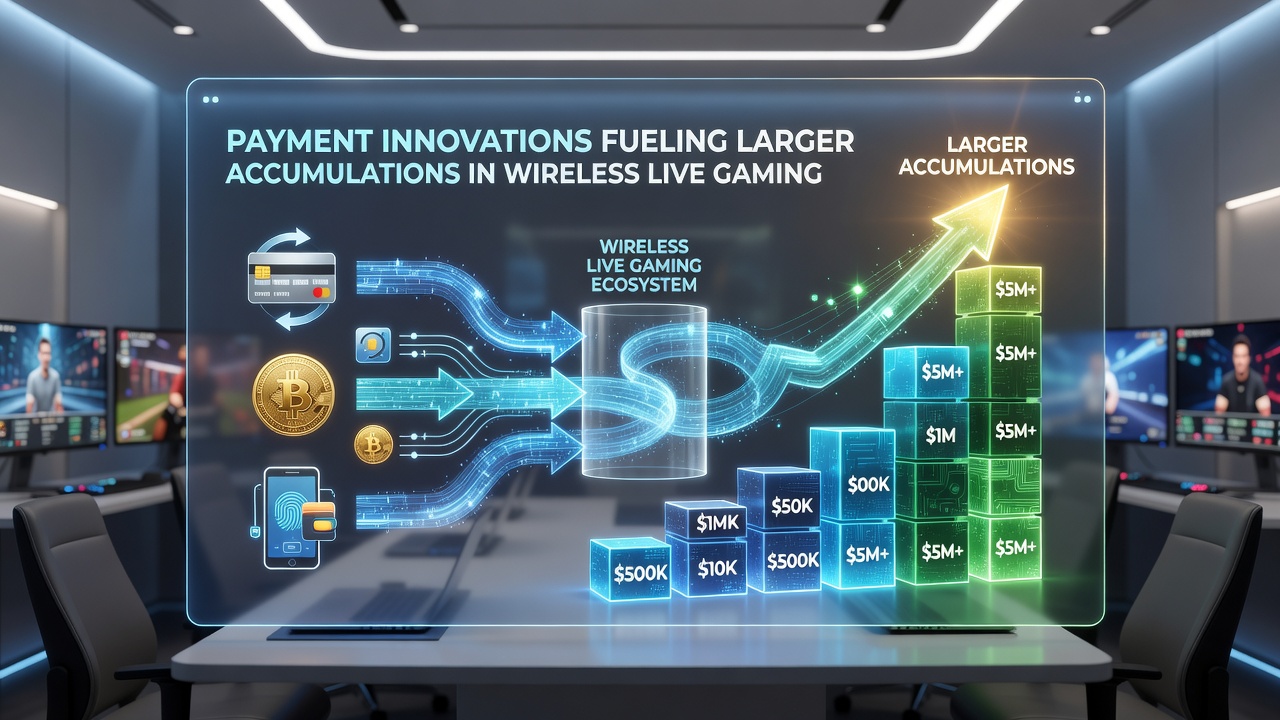
Payment technologies have transformed how funds move into live dealer environments on mobile platforms, creating pathways for continuous contributions that build larger prize pools over time. Systems once limited by batch processing now operate with near-instant settlement, allowing player stakes to feed directly into progressive structures without the lags that once capped growth. Observers note this shift has coincided with expanded participation across wireless networks, where real-time data streams track and amplify accumulations during hosted sessions.
Instant Settlement Mechanisms Expand Contribution Velocity
Traditional banking rails often required hours or days for confirmation, but newer protocols such as open banking APIs and embedded finance tools complete transfers in seconds. These mechanisms route deposits straight into live gaming sessions on handheld devices, where each transaction increments shared prize meters immediately. Research from industry analysts indicates that platforms adopting these rails recorded measurable increases in pool sizes during peak hours, because funds no longer sit in pending states. Players connecting from multiple regions benefit simultaneously, since cross-border rails now clear at comparable speeds to domestic ones.
Wallet integrations further streamline the process by storing verified credentials that authorize recurring small transfers without repeated authentication steps. This design supports the high-frequency betting patterns common in wireless live formats, where participants join tables, place wagers, and exit within minutes. Data from transaction processors shows that such friction reductions correlate with higher aggregate contributions per active user session, directly scaling the rate at which accumulations climb.
Distributed Ledger Applications Introduce Transparent Tracking
Blockchain-based settlement layers have entered live gaming ecosystems, offering immutable records of every stake added to progressive systems. These records allow operators and regulators to verify pool integrity across distributed servers while maintaining the speed required for mobile play. In July 2026 reports highlighted several platforms that migrated portions of their live dealer traffic onto hybrid ledger systems, resulting in documented expansions of maximum payout thresholds because transparency reduced disputes over fund allocation.
Smart contract functions automate the distribution of contributions across multiple jurisdictions, ensuring that international players add to the same visible meter without manual reconciliation. Academic studies from research institutions in Australia have examined these implementations and found that audit trails built into the ledger reduce operational overhead, freeing resources that operators redirect toward marketing larger guaranteed jackpots. The result appears in session logs where prize meters accelerate during synchronized global events.
Regional Regulatory Adjustments Accommodate Faster Flows
Authorities in several markets have updated licensing conditions to recognize instant payment rails as compliant channels for gaming activity. Singapore’s regulatory framework, for instance, now includes provisions for API-driven verification that maintains responsible gambling controls while permitting real-time deposits. Similar updates in Canadian provincial frameworks allow operators to integrate local banking partners that clear funds within the same minute a player selects a live table.
These policy alignments matter because they remove previous barriers that fragmented player bases. When payment options align with local banking preferences, participation widens, and each additional participant adds incremental value to shared accumulations. Figures released by gaming associations in North America show that jurisdictions with updated rules experienced faster growth in average pool sizes compared with those still operating under legacy transfer requirements.
Interoperability Standards Reduce Fragmentation
Industry groups have developed common technical standards for payment messaging that let different wallet providers and banking networks exchange data without custom integrations. This interoperability means a user in one country can fund a session hosted on a server in another without encountering conversion delays or extra fees that once discouraged cross-border play. The resulting increase in connected users expands the contributor base feeding any single progressive meter during wireless live events.
Operators report that standardized APIs also simplify compliance reporting, because transaction metadata travels alongside the funds. Regulators receive granular records that satisfy oversight requirements without slowing the underlying gaming experience. Those who have examined the transition note that reduced technical friction translates into steadier contribution rates throughout each calendar day.
Conclusion
Payment innovations continue to reshape the scale of accumulations available in wireless live gaming by shortening the time between deposit and prize meter increment. Instant settlement, ledger transparency, regulatory adaptation, and interoperability standards each play distinct roles in sustaining higher contribution velocities across mobile networks. As these technologies mature, the structural conditions that support larger pools remain tied to the efficiency of the underlying transaction layers rather than to any single game format or operator strategy.