Shifts in Regional Licensing Transform Accumulative Prize Structures in Live-Hosted Mobile Gaming
Written by Devon Hartmann · Aug 14, 2026

Shifts in Regional Licensing Transform Accumulative Prize Structures in Live-Hosted Mobile Gaming
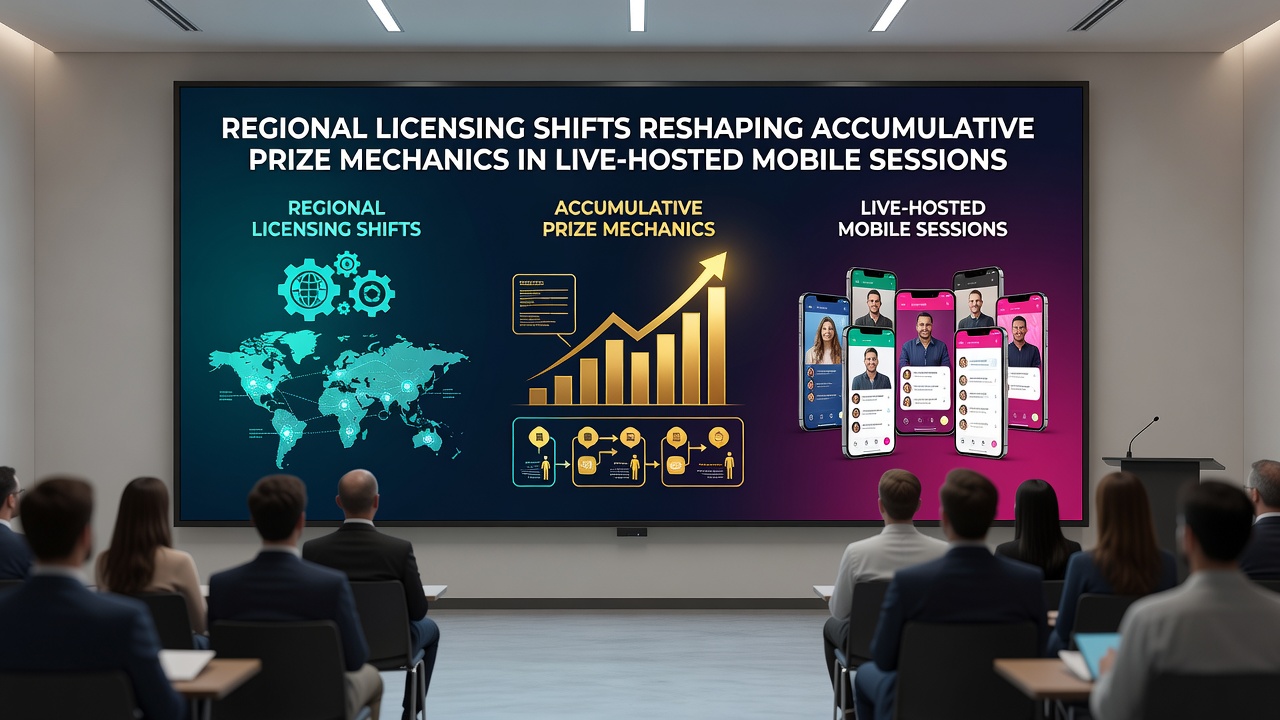
Regional licensing adjustments continue to influence how accumulative prize mechanics operate within live-hosted mobile sessions as operators adapt to fragmented regulatory environments around the world. Data from industry reports indicate that these changes affect prize pooling methods, cross-border player participation, and the technical infrastructure required to maintain compliant progressive systems. In August 2026 several jurisdictions implemented updated licensing terms that directly modify how accumulative rewards accumulate and distribute during real-time mobile interactions.
Regulatory Variations Across Jurisdictions
Authorities in North America, Europe, and Asia-Pacific regions have introduced distinct licensing criteria that reshape prize mechanics. One study from the American Gaming Association reveals that operators must now segment prize pools according to each license's geographic scope, which prevents certain players from contributing to or claiming rewards tied to other regions. This segmentation requires live-hosted platforms to integrate dynamic routing systems that verify player location and license eligibility before each session begins.
European markets demonstrate similar patterns where national licensing bodies enforce separate accumulation rules. Observers note that these rules often mandate independent jackpot pools for each member state, leading developers to build modular backend architectures capable of managing multiple concurrent prize ledgers. Such architectures allow mobile sessions to maintain continuity while complying with local statutes that restrict prize contributions from players outside the licensed territory.
Technical Adaptations in Mobile Platforms
Live-hosted mobile applications have incorporated location-aware APIs and real-time compliance checks to align with evolving license conditions. Research conducted by university gaming technology departments shows these adaptations reduce latency in prize calculations yet increase the complexity of session management. Programmers now design systems that recalculate accumulative totals on a per-license basis, ensuring that contributions from eligible players feed into the correct pool without violating cross-border restrictions.
Impact on Prize Growth Rates
Figures from regulatory filings indicate that segmented pools grow at slower rates than unified global jackpots because each pool draws from a smaller player base. Yet the overall number of active progressive mechanisms has risen, creating more frequent but smaller prize events across different regions. Mobile operators report that players encounter more localized jackpots that reset and rebuild within shorter cycles, which alters engagement patterns during live-hosted sessions.
Case Examples from Multiple Markets
Take one operator licensed in both Australian states and Canadian provinces who discovered that separate licensing agreements required distinct prize ledgers for each area. The company adjusted its live mobile platform to isolate contributions accordingly, resulting in parallel accumulation tracks that run simultaneously during the same hosted session. Similar adjustments appear in reports from operators serving multiple U.S. states where compact agreements dictate how progressive funds may cross state lines.
Another example involves a platform operating under licenses from several Latin American regulators. Those regulators issued updated guidelines in 2025 that took effect by mid-2026, requiring explicit separation of prize pools to prevent any single accumulation from spanning multiple countries. Platform engineers responded by deploying containerized microservices that handle each pool independently while presenting a unified interface to players on handheld devices.
Future Considerations for Operators
Industry associations and research institutions continue to track how licensing shifts influence the sustainability of accumulative mechanics. Data indicates that platforms investing in flexible architecture experience fewer compliance interruptions, whereas those relying on legacy unified systems face repeated redesign cycles. Observers note that ongoing regulatory updates scheduled for late 2026 may introduce further segmentation requirements, prompting additional technical refinements in live-hosted mobile environments.
Conclusion
Regional licensing shifts have produced measurable changes in how accumulative prizes form and distribute within live-hosted mobile sessions. Operators now manage multiple independent pools that reflect the geographic limits of each license, supported by updated technical frameworks and compliance protocols. These developments, documented through regulatory filings and industry analyses, continue to define the operational landscape for progressive reward systems across portable interactive platforms.