Time-of-Day Rhythms Shaping Selections Between Automated Sequences and Hosted Sessions in Regulated Wireless Platforms
Written by Devon Hartmann · Jun 17, 2026
Time-of-Day Rhythms Shaping Selections Between Automated Sequences and Hosted Sessions in Regulated Wireless Platforms
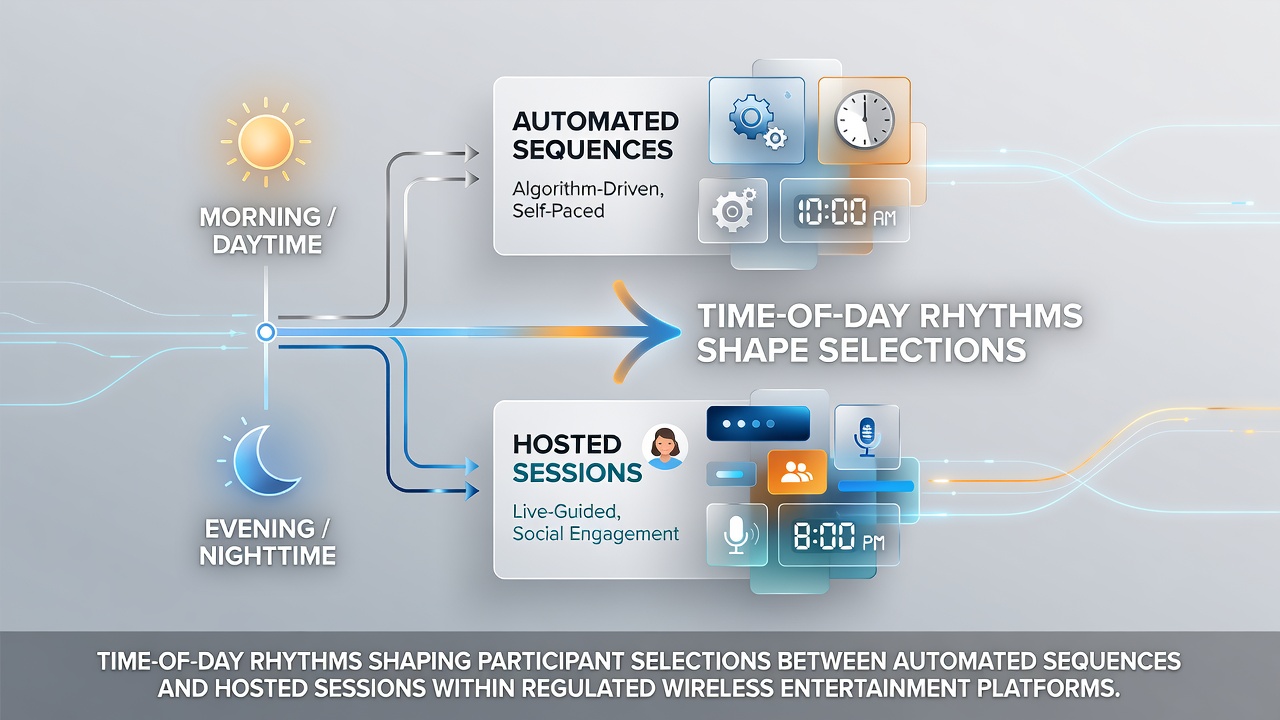
Daily cycles influence how participants approach regulated wireless entertainment platforms, where choices between automated sequences and hosted sessions often align with specific hours rather than random selection. Research from multiple jurisdictions indicates that morning periods see higher engagement with automated sequences, while evening windows draw more activity toward hosted sessions that feature real-time interaction. These patterns emerge consistently across data sets collected from licensed operators in North America and Europe.
Morning Patterns Favor Automated Sequences
Participants logging in between 6 AM and 10 AM tend to select automated sequences at rates that exceed hosted options by notable margins, according to aggregated platform analytics reviewed by industry observers. Quick rounds allow users to complete sessions without extended commitments, fitting schedules that include work or daily routines. Data collected through 2025 and into early 2026 shows this preference holds steady across different age groups, though younger demographics exhibit slightly broader exploration of both formats during these hours.
Regulatory reports from the Nevada Gaming Control Board highlight similar trends in mobile traffic logs, where automated game initiations peak during pre-commute windows. Operators adjust server allocations accordingly to maintain smooth performance when these rhythms intensify.
Evening Shifts Toward Hosted Sessions
As clocks move past 6 PM, selections pivot noticeably toward hosted sessions. Participants seek social elements and live pacing that automated sequences cannot replicate, with interaction times extending longer into night hours. Studies tracking user behavior on regulated platforms reveal hosted session starts increase by double-digit percentages during prime evening blocks, particularly on weekends.
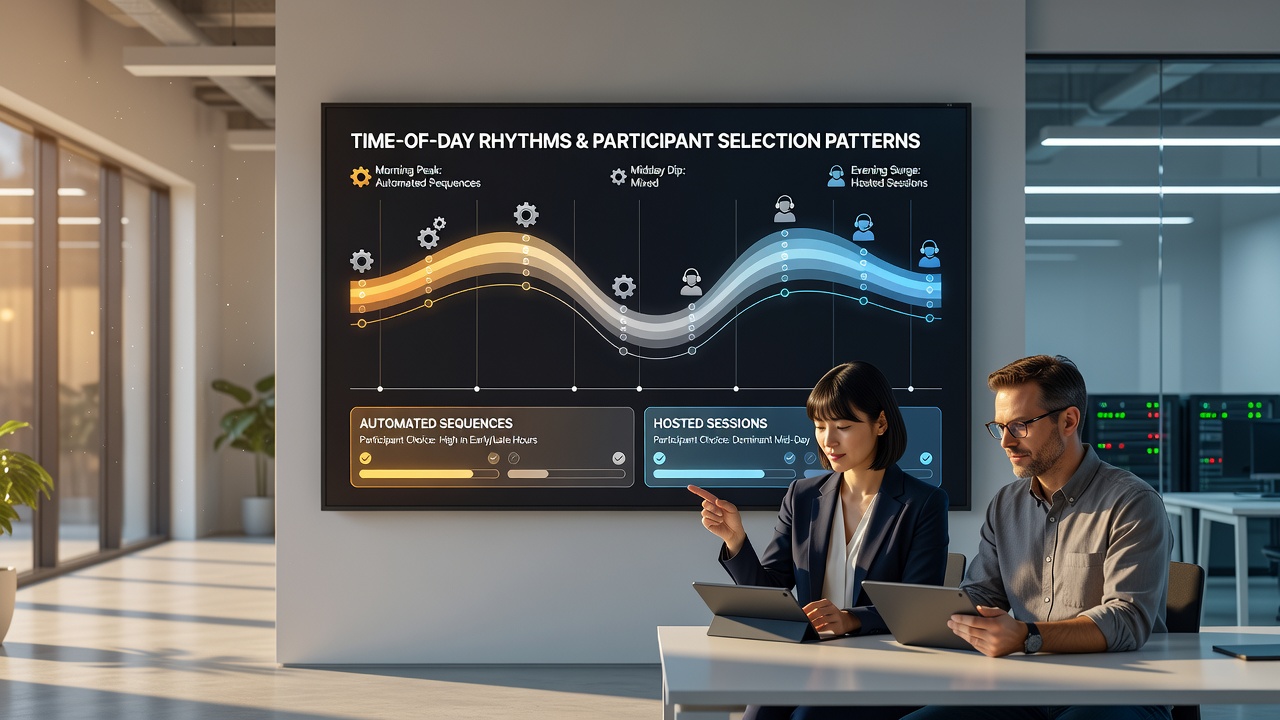
One analysis covering Canadian provincial data through June 2026 found hosted table activity climbing steadily after sunset, while automated reel engagement declined in parallel. Platforms respond by staffing more dealers and expanding table availability during these periods to match observed demand.
Factors Driving These Rhythms
Multiple elements contribute to the observed shifts. Circadian influences on attention and social appetite play roles, alongside practical considerations such as device usage contexts. Morning users often operate on smaller screens during commutes or breaks, favoring streamlined automated sequences that require minimal setup. Evening participants, frequently at home with larger screens or tablets, engage more readily with hosted formats that reward sustained presence.
Academic reviews from institutions examining digital behavior patterns confirm these correlations hold after controlling for variables like device type and account tenure. Operators use this information to refine promotional timing without altering core game mechanics.
Regulatory Context Across Jurisdictions
Licensed environments maintain oversight that ensures these preference patterns develop within compliant boundaries. Australian state gaming authorities track similar hourly distributions in their reporting frameworks, noting stable rhythms that persist year over year. European regulators similarly document time-based variations in session types across member states, emphasizing responsible play tools that adapt to peak periods.
Platforms incorporate these insights into responsible gaming features, such as session reminders that activate more prominently during high-engagement windows identified through longitudinal data.
Platform Adaptations and Future Trends
Wireless operators continue refining algorithms that anticipate these daily transitions. Resource distribution between automated servers and live dealer streams adjusts dynamically based on historical and real-time signals. By mid-2026, several major platforms had implemented predictive staffing models tied directly to time-of-day analytics, reducing wait times during hosted session surges.
Cross-border comparisons reveal consistent underlying rhythms despite differing regulatory details, suggesting biological and behavioral factors outweigh local market variations in shaping selections.
Conclusion
Time-of-day rhythms produce measurable effects on how participants navigate between automated sequences and hosted sessions within regulated wireless entertainment platforms. Morning hours align with automated preferences while evenings channel activity toward interactive hosted formats, patterns supported by regulatory data and operational records across multiple regions. These established cycles guide resource planning and feature development as platforms evolve through 2026 and beyond.